Garden Keeper: Peace, Sahelnomad! It’s been a while. Things are quite volatile in North Africa right now and I know you are very familiar with that scene, having lived in Africa for the past couple of decades.
Sahelnomad: Very amazing events, to be sure – who could have predicted all this a year ago?
Desert Bum: Yes, but what is getting lost in all this news of inter-Arab turmoil is the birth of a new non-Arab nation in the neighborhood.
Garden Keeper: That’s right. We now have our first new nation (South Sudan) in Africa in almost two decades.
Desert Bum: I’m wondering, Sahelnomad, your thoughts on what impact a new nation in southern Sudan will have on things in North Africa, especially in the Sahel.
Garden Keeper: Remind me what the Sahel is…
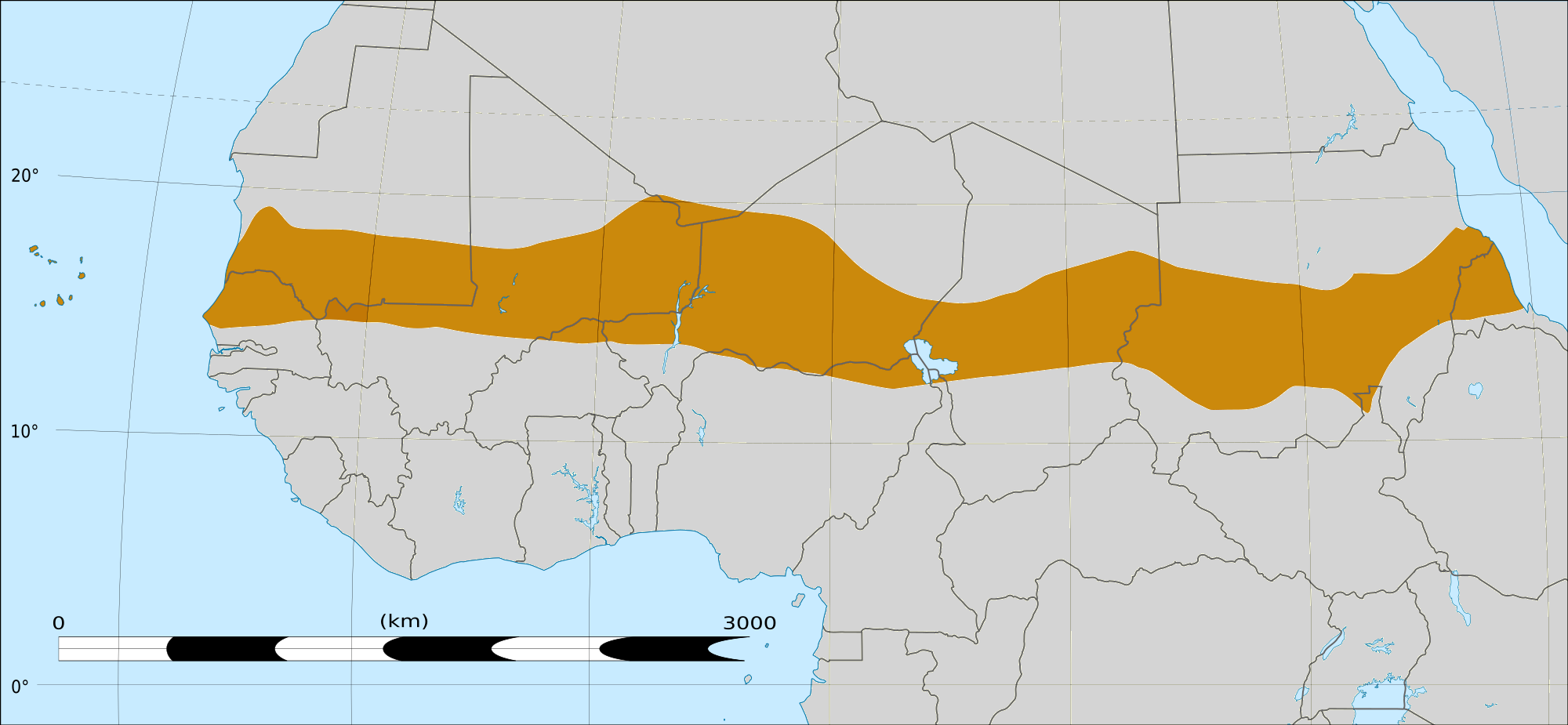
Desert Bum: The transitional geographical east-west band across Africa that divides the continent between the Sahara Desert to the north and the Savannas to the south.
Garden Keeper: Oh, yes. The Sahel is also a cultural transition zone between the Arab and Muslim north and the black Christian south, isn’t it?
Desert Bum: It's not as easy as Arab/Muslim and Black/non-Muslim. The ethnic lines were more blurred in ancient Sudan and Egypt, with some experts unsure of how to classify the population. Before the late Middle Ages, most of Sudan was the Christian Kingdom of Nubia, when it was then destroyed by Islamic Egypt. The influx of Arabs and other "northerners" in the Middle Ages pushed the northern limit of Blacks further south, at the same time sharpening the divide.
Sahelnomad: South Sudan today is indeed a mix. It is generally misunderstood that the Southern Sudanese are not exclusively Christian. Many are animists, so their reaction is as much a cultural one as a religious-based response.
Garden Keeper: So is the South Sudan conflict then different than the one in Darfur?
Sahelnomad: All true. The calamities of Darfur were not between black and Arab Sudanese but between two Arab groups that have historically had tensions. Consequently, even if you divide the two regions, there will continue to be the devastation of divided peoples.
Desert Bum: But this north-south division is not only true for Sudan. These African nations are as much the construct of colonial powers as anything indigenous to the region.
Sahelnomad: Sudan’s situation is indicative of the socio-religious fault-line that runs through the Sahel of Africa. Chad, Mauritania, Niger and Mali are also in that zone. And, while Nigeria lacks the racial clash of the Magreb (Arab) north, they’ve been having violent outbreaks this past month in Jos due to the same dynamic.
Garden Keeper: Meaning between Christians and Muslims, I assume, which has been an historic problem for Nigeria. It is true that there are Muslims south of the Sahel as well as Christians and animists. However, the Sahel fault-line you speak of is between the Arabs to the north and the non-Arabs to the south, right?
Sahelnomad: Basically. Sudan is particularly complex because the cultural divide is so distinct. The Arabs have attempted to impose their culture, language and religion on the blacks in the South. Many in the south have been forcefully repatriated in the North where they are placed in Islamic schools and completely cut off from their families. There is a distinct disdain by the Arab elements towards the southerners. When I was there it was obvious.
Garden Keeper: Why doesn’t the Arab north just let the non-Arab south go?
Sahelnomad: The whole situation is further complicated by economics. Southern Sudan is the actual cash cow for the Sudanese economy. The oil that has fueled their economic ascendency is primarily located in the area that South Sudan constitutes.
Garden Keeper: Thus the southern territorial clashes.
Sahelnomad: Precisely. The northern government tried to change the provincial geographic boundaries unofficially and/or incite another civil clash that would postpone the inevitable.
Garden Keeper: So, will Sudan be the Tunisia of the Sahel, the national conflict that kicks off widespread conflagration throughout the band of countries just south of those Arab nations bordering the Mediterranean Sea?
Sahelnomad: As to whether Sudan becomes a catalyst for changes in Chad and elsewhere is not yet known. It is true that in both Chad and Mauritania the northern ethnic groups dominate those in the indigenous south and there is a constant racial division.
Sahelnomad: As to whether Sudan becomes a catalyst for changes in Chad and elsewhere is not yet known. It is true that in both Chad and Mauritania the northern ethnic groups dominate those in the indigenous south and there is a constant racial division.
Garden Keeper: So is dividing Sudan a good thing or not?
Sahelnomad: On a church level, this presents an interesting conundrum since the church in Sudan is dominated by southerners who are beginning to become missional towards the north. But the independence of the south might present some logistical impediments since they would now be less welcomed in Sudan to the north.
Sahelnomad: On a church level, this presents an interesting conundrum since the church in Sudan is dominated by southerners who are beginning to become missional towards the north. But the independence of the south might present some logistical impediments since they would now be less welcomed in Sudan to the north.
Desert Bum: If the southern church is beginning to see the north as an obvious mission field, they will need to be careful to not express it in political or historical terms ("retaking the north"), especially now with an international border to deal with.
Garden Keeper: I just read that Bashir [president of Sudan] will not run again for office when his term is up in four years. A long time out, but protests seem to be developing in Khartoum as well.
Sahelnomad: Samuel Huntington's Clash of Civilizations speaks of the youth demographic in the Magreb (the Arab nations of North Africa). Most of the protests seem to be fueled by disenchanted youth that comprise over 50% of most populations in the Arab world.
Desert Bum: Things are moving so fast it is hard to keep up.
Garden Keeper: So how is Sudan going to differ from Egypt?
Desert Bum: In contrast to Egypt to the north, the concurrent separation of South Sudan adds an extreme level of complexity to the Sudanese situation. Also, Mubarak, while considered a dictator, was never condemned for genocide in the International Criminal Court like Bashir has been. He has been under threat of arrest by the international community, the first sitting head of state to be so. If he is stepping down, regardless of an uprising, this places him in a sticky situation. All of which leads me to think that such unrest must have other factors involved as well.
Sahelnomad: Sudan is a bit different entity than Egypt and other northern neighbors, but I can't help but think that the recent division of the country into two states has not helped Bashir’s cause with his other traditional enemies. What I hear is that in the past their (the Sudanese) striving is not simply racial or religious but, like most of Africa, ethnic. They are loosely held together by force so it will be interesting to see if the recent developments in the South will encourage Darfur and other parts to separate.
Desert Bum: Certainly part of the danger of instability in Egypt is the loss of an anchor in Africa, and this now seems to indeed be happening. I think it is unlikely that either Gaddafi in Libya or Bashir Sudan would be facing such opposition if Mubarak were still in power in Egypt. So far the media has only really considered the Arab world and possibly Iran in this so called Arab revolution, but I think it may be time to cast the net wider, starting with Northern Africa and see that there are a multitude of dynamics at work.
Garden Keeper: Not easy to know how to pray for these situations, but pray we must. Disruption can stir a people to be more open spiritually, but transmission of the gospel is generally aided by a peace that brings freedom of communication and mobility. And, too, the common people are more likely to benefit from peace in their land, especially if that peace includes a more just society.


No comments:
Post a Comment